12 Tips to Reduce Your Risk of Shark Bite: What Bull Shark Visitors Should Know
To learn about bull sharks, you must understand the precautions that ocean activities require. Sharks inhabit coastal waters, estuaries, and even freshwater, so their habitat can overlap with places people swim and fish.
The following 12 recommendations are based on the Florida Museum of Natural History’s International Shark Attack File (ISAF), specifically its “Tips to Reduce Your Risk of Shark Bite”, with added context for visitors considering bull shark diving in Playa del Carmen.
These are general precautions, primarily for swimmers. They are not a checklist that makes an organized shark dive risk-free. If you are interested in diving with sharks, you can find more information in this article: What to Know Before a Bull Shark Tour
1. Keep a buddy nearby
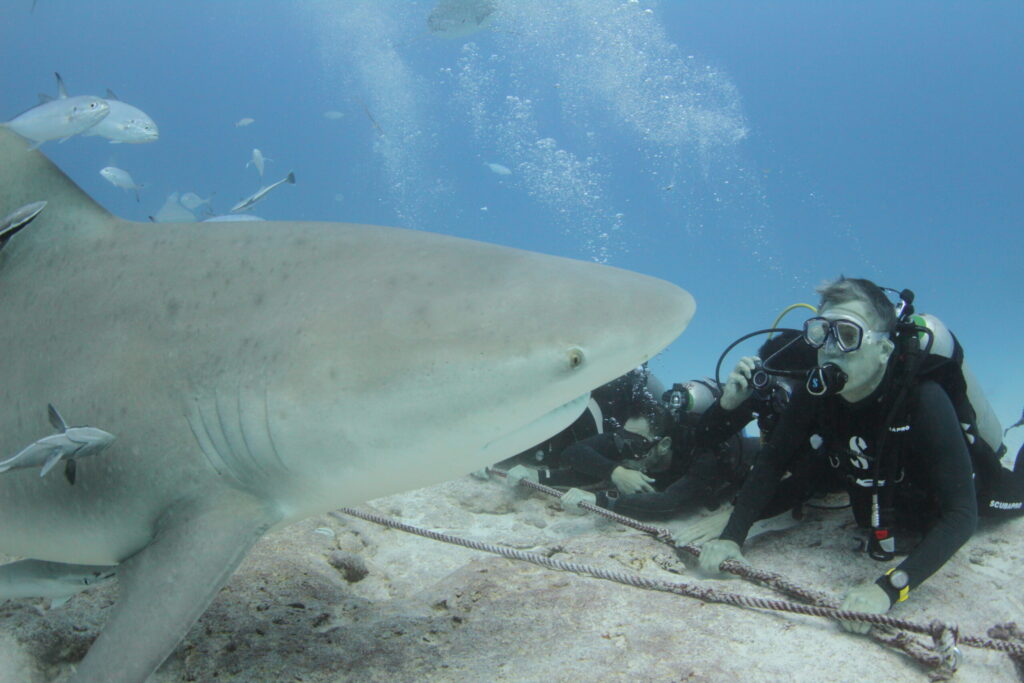
Divers knows very well how the buddy system works. You need to stay connected with your buddy and the group during the whole experience. It’s also very important to remain calm and to keep a partner close during an encounter. Make sure to understand buddy arrangements before entering the water rather than improvising once you descend.
2. Avoid swimming far offshore
Distance from shore can also mean distance from assistance. NOAA includes staying near shore among its beach safety recommendations. On a boat-based dive, ask a different practical question: how are entry, exit, boat support, and emergency assistance organized?
3. Be careful around sandbars and drop-offs
NOAA identifies areas inshore of sandbars, between sandbars, and near steep drop-offs as locations where shark bites are more likely to occur. Bull sharks, for example, prefer shallow coastal habitats. Because of this, shallow water should never be treated as a shark-free area.
4. Skip swimming at twilight or after dark
NOAA recommends avoiding darkness and twilight when swimming in shark habitat. If you are planning your vacation, choose activities with those conditions in mind. In our dive center we offer both morning and afternoon departures during daylight hours, so feel free to ask our team about exact schedules and expected visibility to choose the best option for you
5. Stay out with an actively bleeding wound
As always you should treat any open and/or bleeding wound before invonlving in ocean activities. This is a precaution but don’t fall for the human’s blood myth. ISAF says attraction to its smell has not been demonstrated. Its separate menstruation guidance also reports no positive evidence that menstruation is a factor in shark bites.
6. Leave reflective jewelry behind
The use of shiny jewelry is discouraged because the reflections may resemble fish scales. This is why removing unnecessary accessories is an important preparation step. Also, before a shark dive, talk with the instructors about which equipment is required. Trying and choosing suitable gear is easier before departure than making last minute adjustments on the boat.
7. Give fishing areas space
The original list repeats fishing-related precautions, underscoring their importance. The museum identifies spearfishing and attempts to feed sharks among circumstances classified as provoked incidents. For recreational swimming, keep away from active fishing rather than joining the action to watch.
8. Do not treat dolphins as an all-clear signal
Seeing dolphins can be exciting, but it does not establish that sharks are absent. The museum’s FAQ explains that dolphins and sharks may feed alongside one another. Enjoy the sighting without using it to decide whether a swimming location is suitable.
9. Reconsider entering murky water
Reduced visibility makes observing your surroundings harder. Bull sharks can inhabit turbid environments; their presence does not depend on clear water. Before diving, discuss visibility with the operator and ask how conditions affect the plan. A photograph of clear Caribbean water cannot tell you today’s conditions.
10. Limit unnecessary visual contrast
The museum’s list mentions bright clothing, contrasting colors, and uneven tans. Its Color of Apparel guidance emphasizes contrast rather than a universally dangerous color. It also says rescue visibility takes priority: do not discard essential signaling equipment simply to make yourself less conspicuous.
11. Keep surface splashing controlled
Excessive splashing can prompt investigation. For scuba participants, preparation should include controlled entries and movements appropriate to the dive plan, which is also requested for every dive. Staying composed also helps you remain attentive to your buddy and instructions. Keep in mind this preparation won’t guarantee the shark response.
12. Avoid swimming where sharks are present
For swimmers, ISAF recommends staying out when sharks are present and leaving calmly if they appear. Deliberate shark observation is a different activity. The museum also advises against feeding wildlife to reduce risks. Keep in mind that at Phantom Divers, our trained guides use fish under strict safety protocols to attract the sharks, which can heighten their activity. This is why we have clear prerequisites for joining this tour.
Why Dive with Bull Sharks?
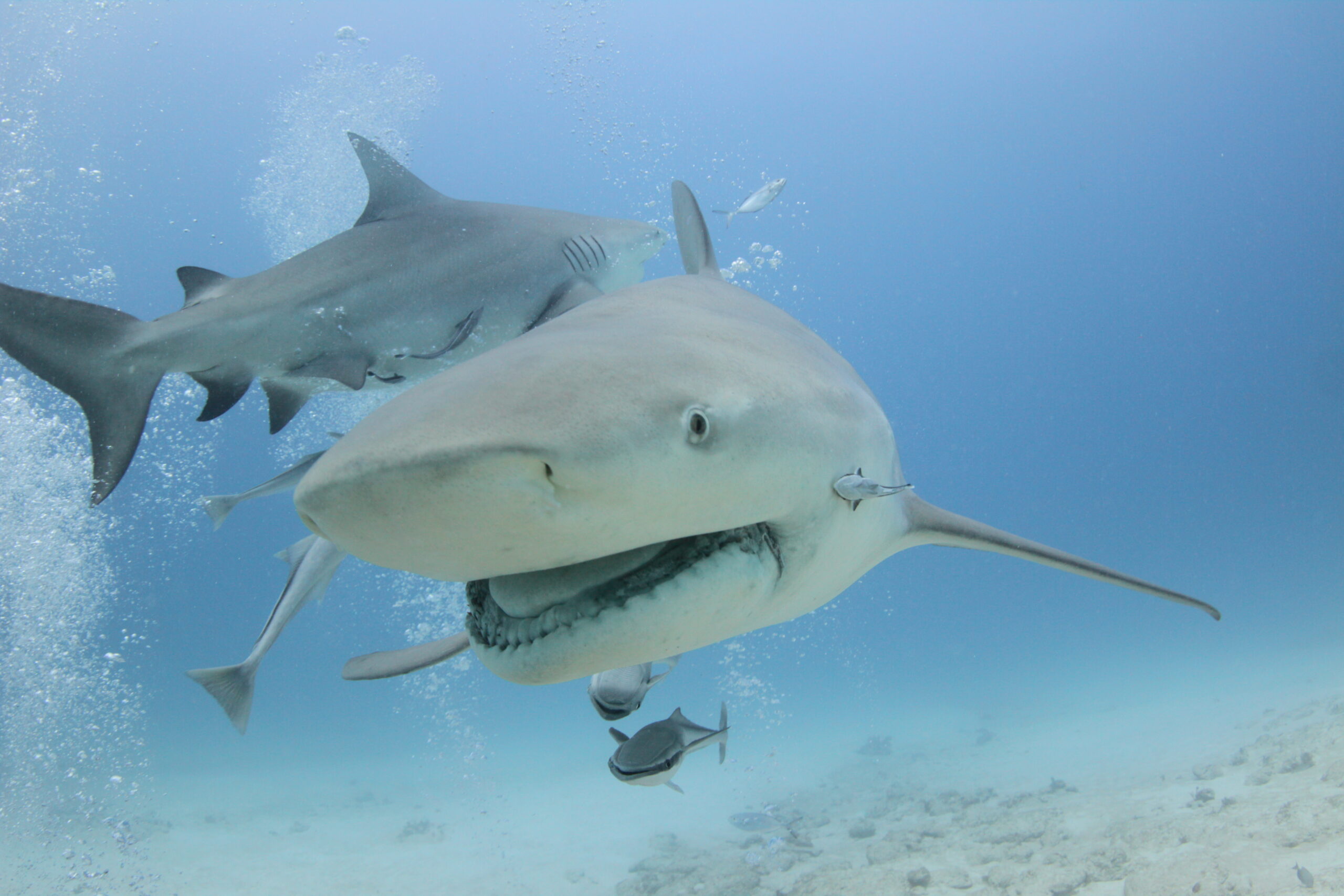
Understanding these safety measures not only reduces risk, it transforms how you experience the ocean. Diving with bull sharks in their natural habitat offers a rare opportunity to observe one of the ocean’s top apex predators up close, moving with calm precision rather than the exaggerated aggression often portrayed in popular media. Seeing them glide effortlessly through the water replaces fear with genuine respect and a deeper appreciation for marine ecosystems.
Beyond the thrill of the encounter, responsible shark diving plays an important role in marine conservation. Experiencing these animals firsthand turns divers into ocean advocates, fostering awareness about the threats sharks face and supporting local ecotourism that values living sharks far more than commercial fishing. For certified divers looking for a meaningful, awe-inspiring underwater experience in Playa del Carmen, few dives are as memorable.
Discover Bull Sharks with Phantom Divers
Would you like to observe these remarkable animals during bull shark season? Explore our experiences and speak with our team about the option that matches your certification, diving background, and comfort level.
Book your bull shark tour with Phantom Divers and take the next step toward bull shark diving in Playa del Carmen.
More Than 25 Years in Playa del Carmen
Marco Loria Erbacci and Jorge “Chino” Loria, together with Phantom Divers, helped pioneer bull shark diving in Playa del Carmen. With more than 25 years in the area, Phantom Divers brings a long local history to the experience of discovering these animals.